

Culture Study Part 2 of 5: Geography in Culture
You can download the whole study HERE
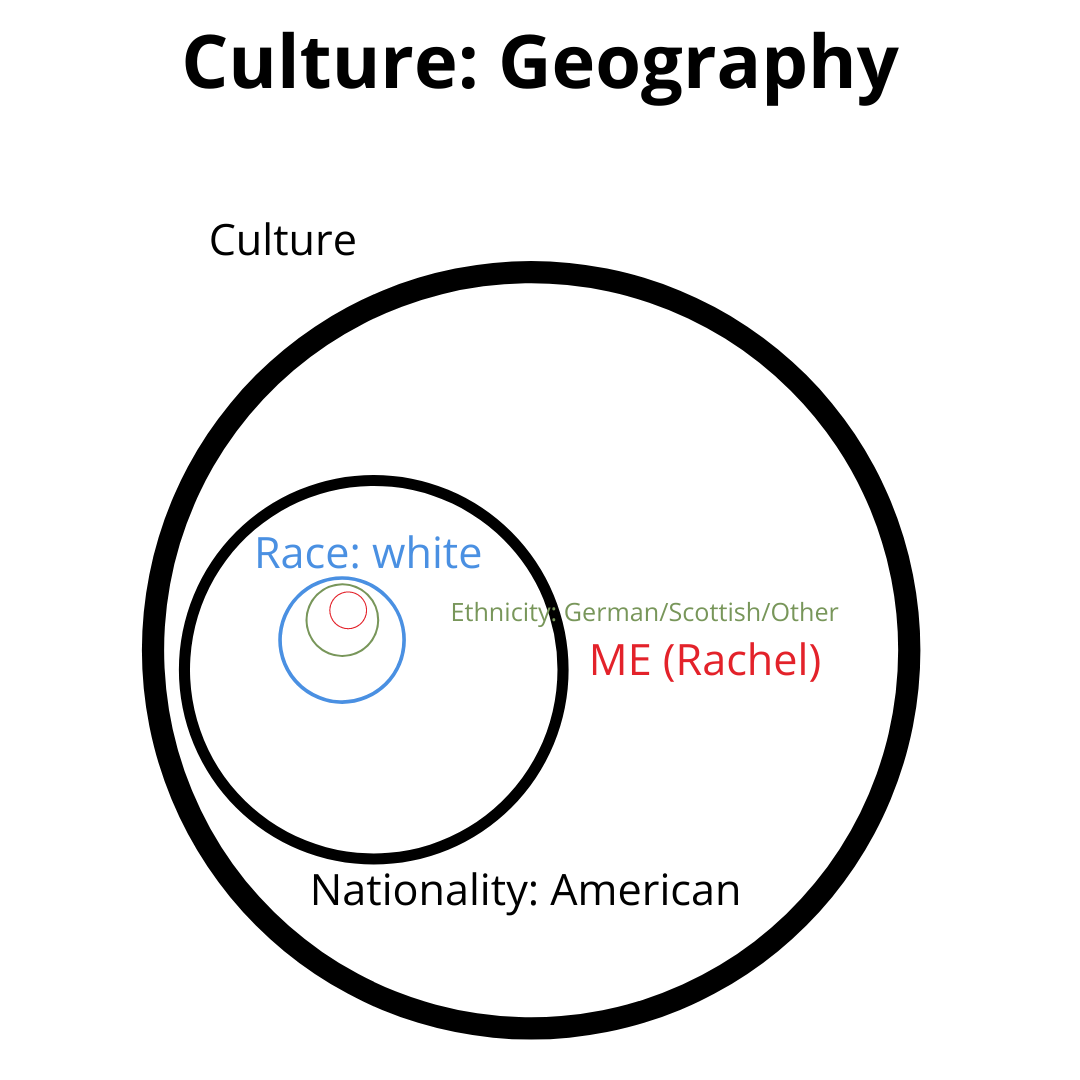
For me, my nationality is American. I was born in America, I have an American passport and citizenship, through no effort of my own. My race, as described by my skin color, hair, and facial features, in our American history story, is white. My ethnicity, which fits fully within what is considered white, is German/Scottish/other, coming from my parents and their parents and their parents and so forth. I don’t think about my ethnicity much, as we don’t have a lot of specific traditions passed down from Germany and Scotland and wherever else. I don’t think about being white much, as it is still the majority “race” in America: white people were the ones who decided the rules for race in our American story. Being white works, generally, as the default setting.
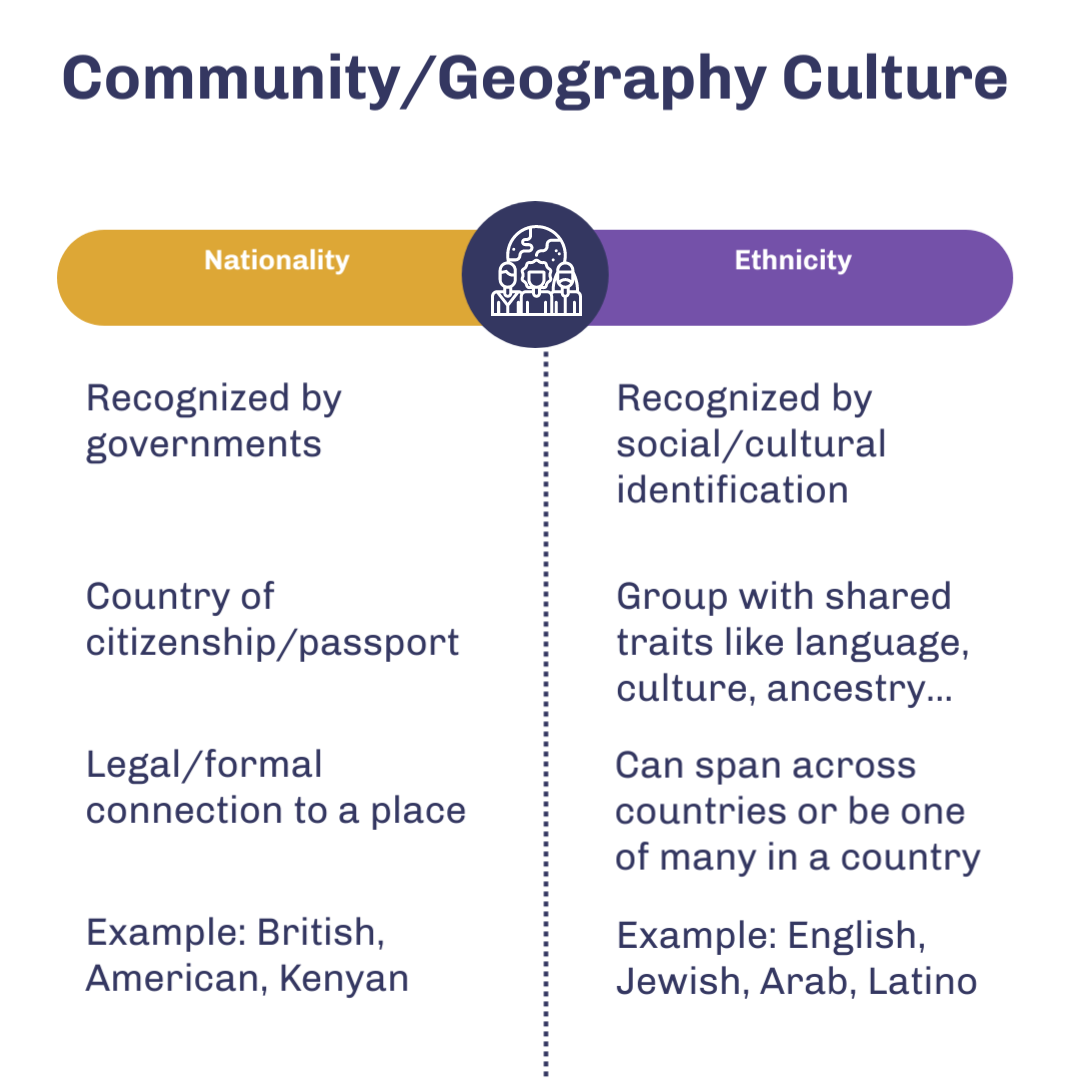
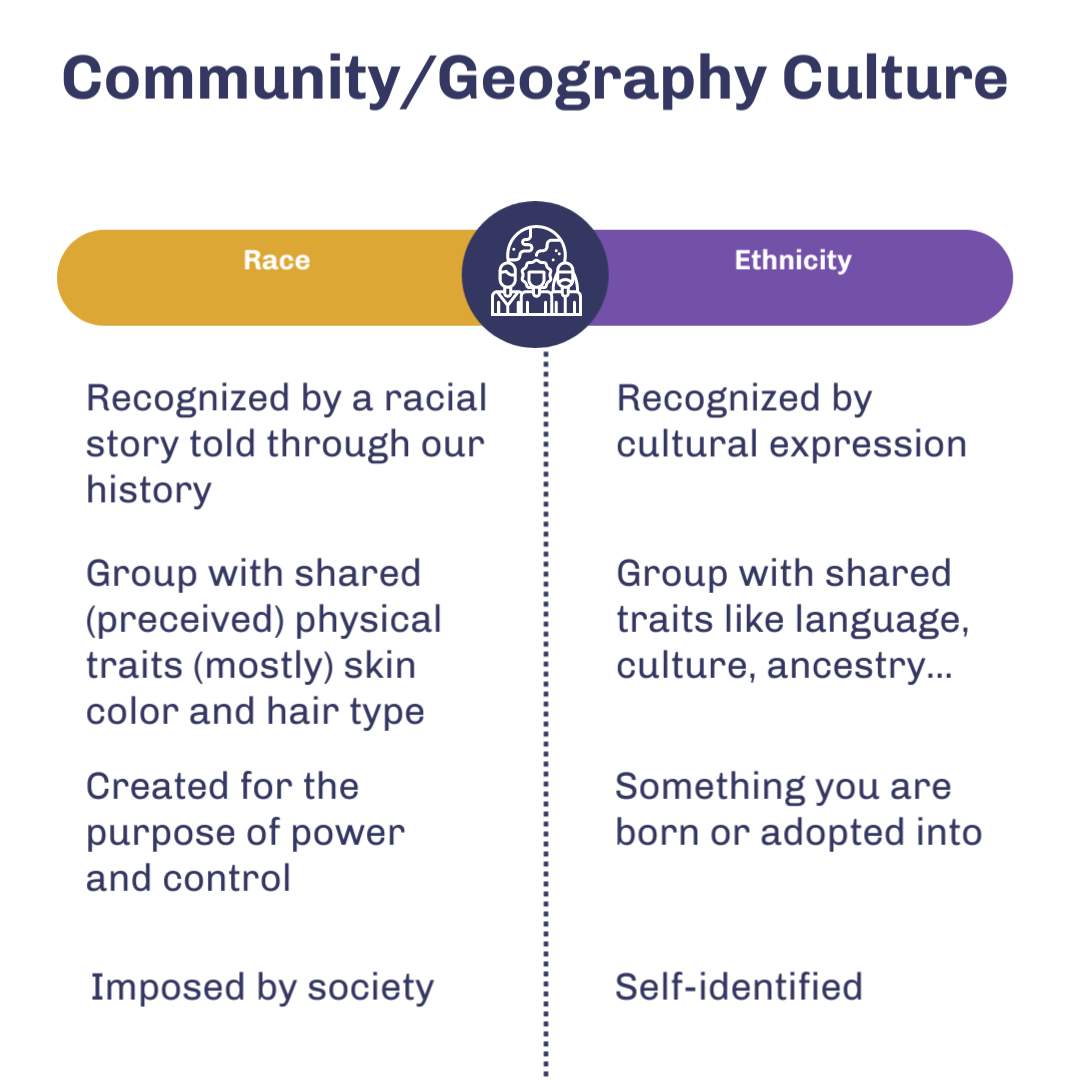
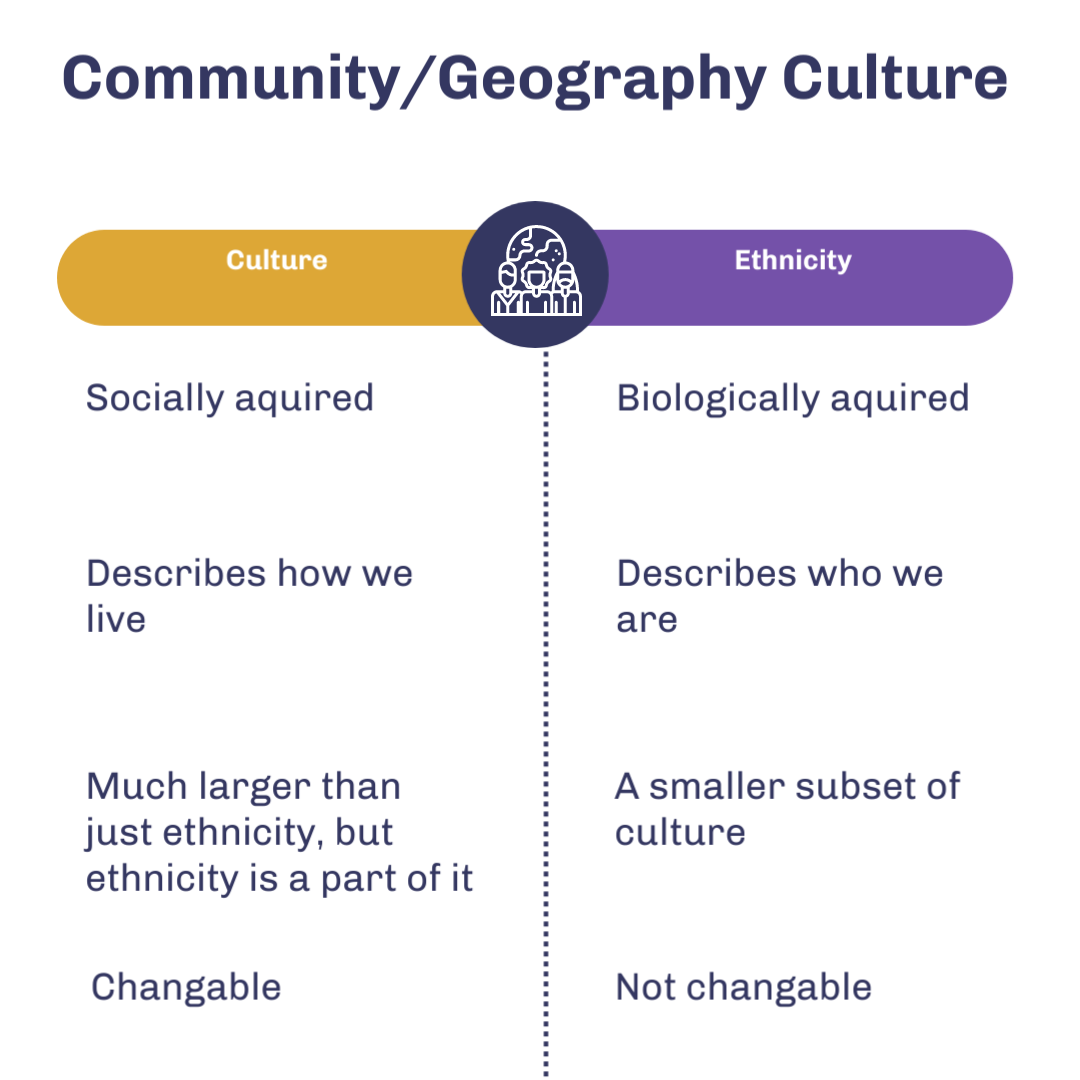
Understanding the differences between nationality, race, ethnicity and how they fit within a culture is a bit tricky because there are parts that are visible (race—mostly) and parts that have parts that are visible and parts that are not visible (ethnicity) and parts that don’t depend on anything visible (geography doesn’t show up on your face), but might have visible stereotypes attached to it (nationality). We might not feel connected culturally to the geographic parts of our culture, for many reasons. There may be (historical) trauma and difficult experiences connected with this part of our culture. Being more aware of our terms can help us to not stereotype things we personally have no experience or knowledge about.
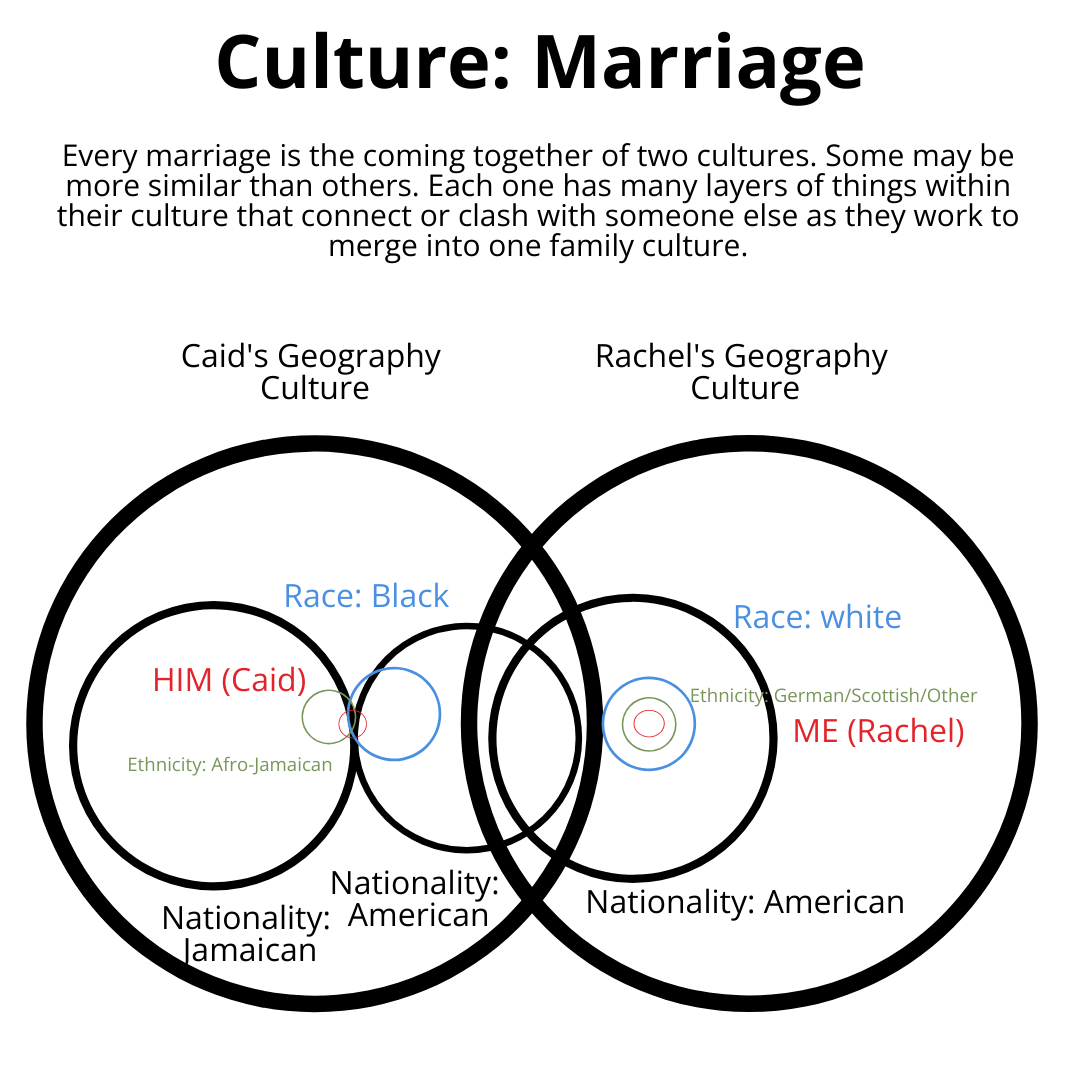
My husband, Caid, has his own culture, and his own specific geography part of his culture. He was born in Jamaica, but came to America when he was 5, and was naturalized when he was 11. So he is now an American citizen. He lives in the overlap of the two in a way. Race, as it is known in America, as not the same in Jamaica. He is considered/identified as Black in America, but connects with that experience in a different way than other Black people might. His ethnicity is Afro-Jamaican, but for much of his life, he didn’t connect with a lot of that, as he was surrounded and influenced by (majority white) Americans.
Even though this looks complicated, this area of our culture has not been a big issue in our marriage. We’ve had many more complications in the area of money and communication than anything to do with ethnicity and race. Most people consider us to be the ones in the multicultural marriage, when reality is: so are they. When we lived in Brazil, we were mostly identified by our ethnicity (Jamaican and American). When we came back to the USA, it changed to race (white and Black). In Brazil, how they noticed we were different was by our language, whereas in America, it is skin tone.
Even though Caid and I do not overlap in race, we probably overlap a bit in ethnicity: “Ferguson” is Scottish/Irish, and my grandma was “(Mc)Coombs” which is Scottish. If we got our DNA tested, we’d know for sure. But we don’t know. Because great grandpa Ferguson (light skinned? Mixed?) got great grandma Hudson (white, English) pregnant, and was run out of the community before anyone could ask about his history. And just like that: all the stories, the heritage, the traditions, the culture: erased. It didn’t stay empty: a new culture emerged with grandpa Ferguson, but it was a story marred with colorism (alienation from his Afro-Jamaican culture). It was a culture without a mother or father (he was raised by his English grandmother). All of these things mark a person forever. It marks their children, and their children’s children. And it affects, although in a much smaller way, my children, so many generations later.