

Culture Study Part 1 of 5: What is Culture?
You can download the whole study HERE
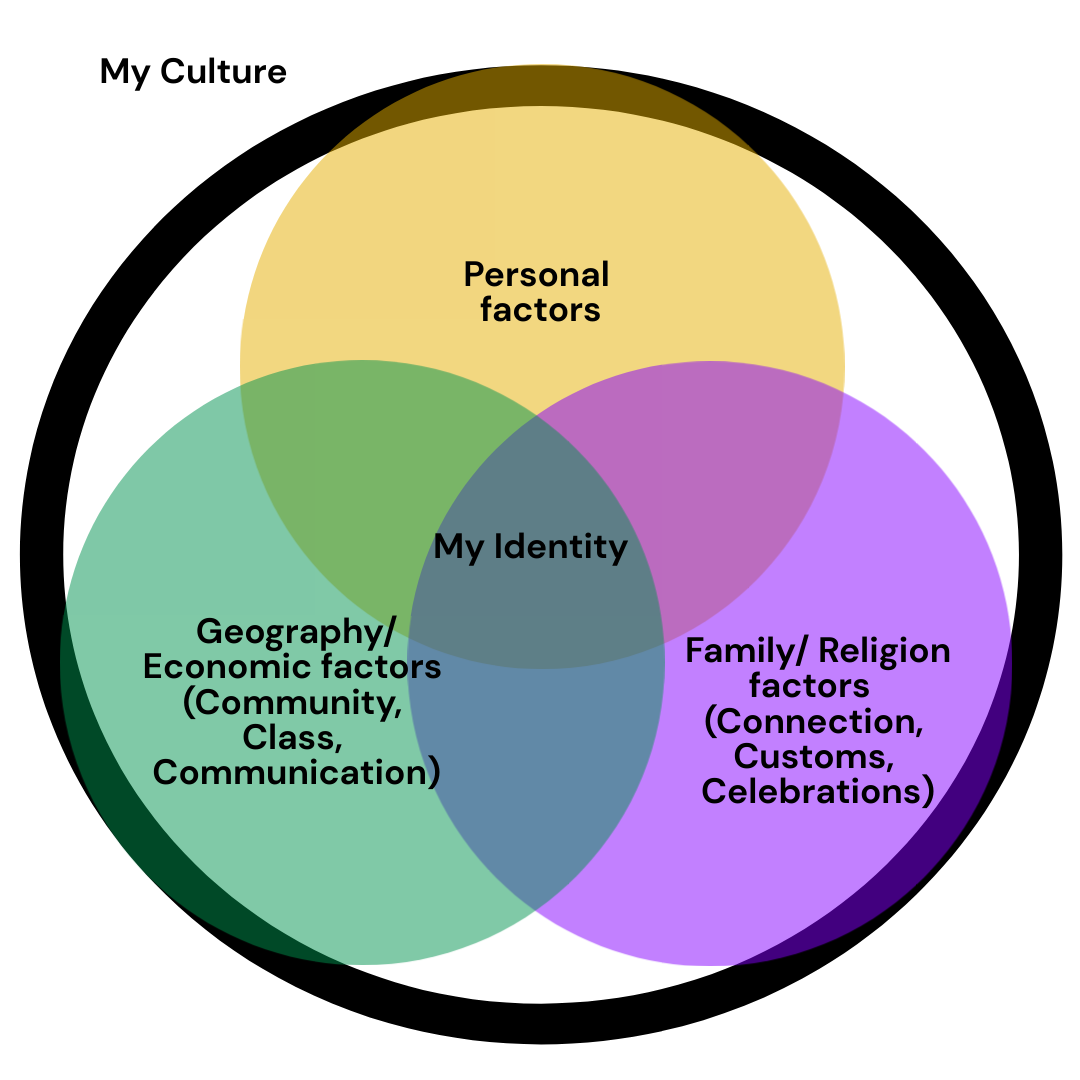
Culture is made up of many different things, and can be organized, thought of, and talked about many different ways. An oversimplified way of describing culture is saying it is HOW we do life. HOW we communicate, celebrate, connect, HOW we have community, class, and customs. How we do life is also dependent on personal factors such as personality, gender, abilities, and age. Our identity is what, from our culture, we put value on to represent (identify) us. This is what we specifically choose, as well as what others choose for us (how they identify us). Your culture, as an individual, is a unique combination of how you do life. People who are more like you usually share your culture (factors); people who are more different usually have a different culture (factors).
The more you are aware of your own culture (and layers of different parts of culture at play in your own life), the easier it is to give grace and have humility to others who are different from you. In some ways, EVERYONE is different from you. Even a twin, raised in the same home, has different factors that lead them to connect with different things and experience different things, leading to a slightly different cultural makeup. And culture changes: you change. Most of the time when we talk about culture, we don’t just mean all of the different factors that make up your culture: we mean the SHARED aspects of culture between groups of people: like talking about a specific food/meal that has significance, or a traditional celebration, or a joke.
Is Culture Good or Bad?
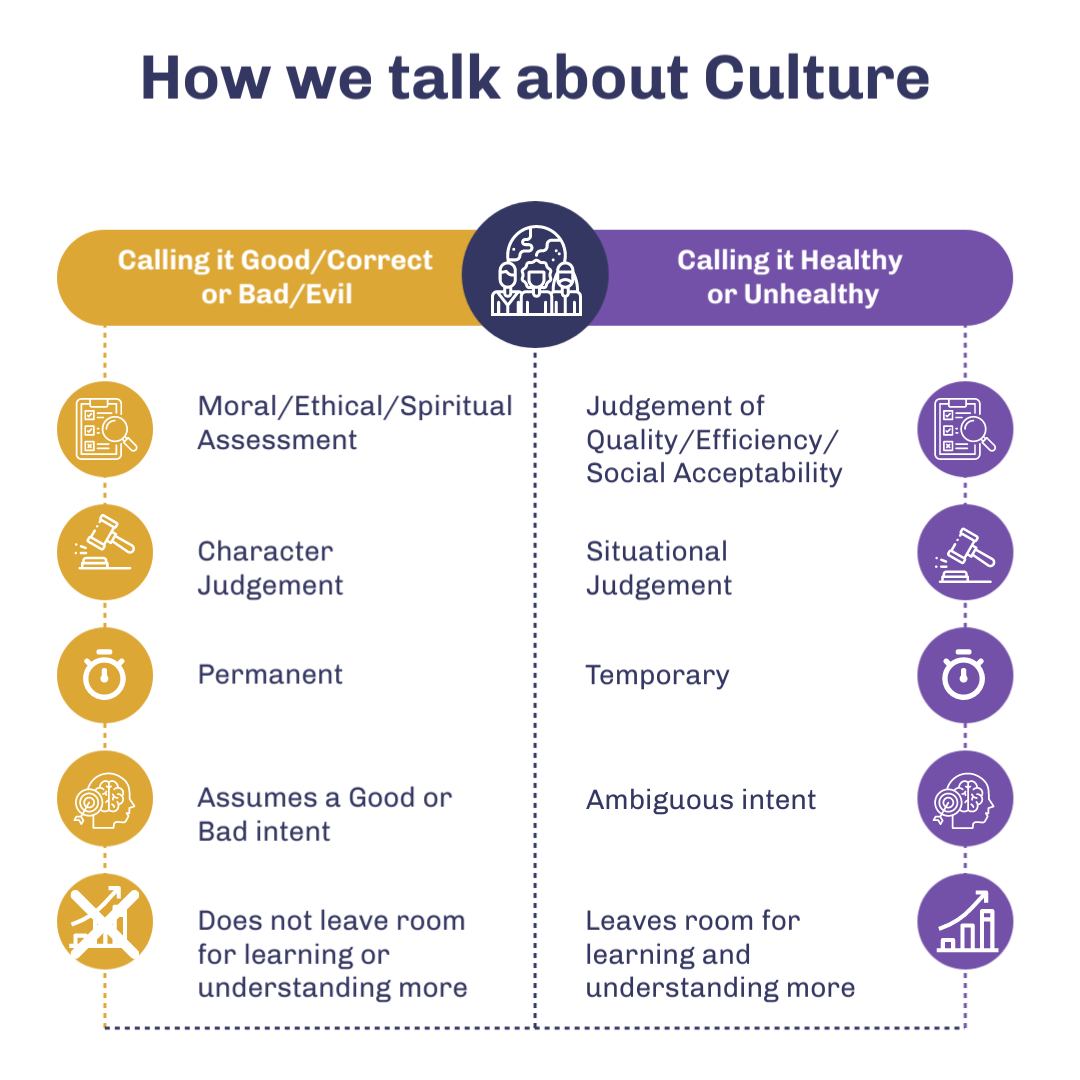
It is helpful to call culture “healthy or unhealthy” when talking about different aspects of it, since there are so many moving parts of culture. Using the terms “good” and bad” can be ambiguous as to your meaning. Good can mean healthy, or good can mean the correct or right way of doing something. Bad can mean unhealthy to some people, while to others it means the evil of wrong way of doing something. Culture is such a large scope of things in our lives: the majority of which is open to interpretation, and not a moral judgement. There are definitely times when how we do life is unhealthy or even needs to be called out as wrong and evil, but that is rarely, if ever, about someone’s WHOLE culture. Culture is mostly healthy or unhealthy depending on the interpretation/intent/character of the individual.
Most cultures (referring to large groups of people united by different cultural factors) have an idea of what they call “right and wrong.” How those values are played out can (and has) looked very different over time, location, and culture. It is often most easy to see what you disagree with, or you feel is wrong with, about a different culture. It is easy to see our own culture as the standard, or what is normal, making everything else “abnormal” and suspicious. Often, we compare the best of what our culture has to offer, with the worst of what we see in another culture, and make a judgement like “My culture is better because we do/don’t…”
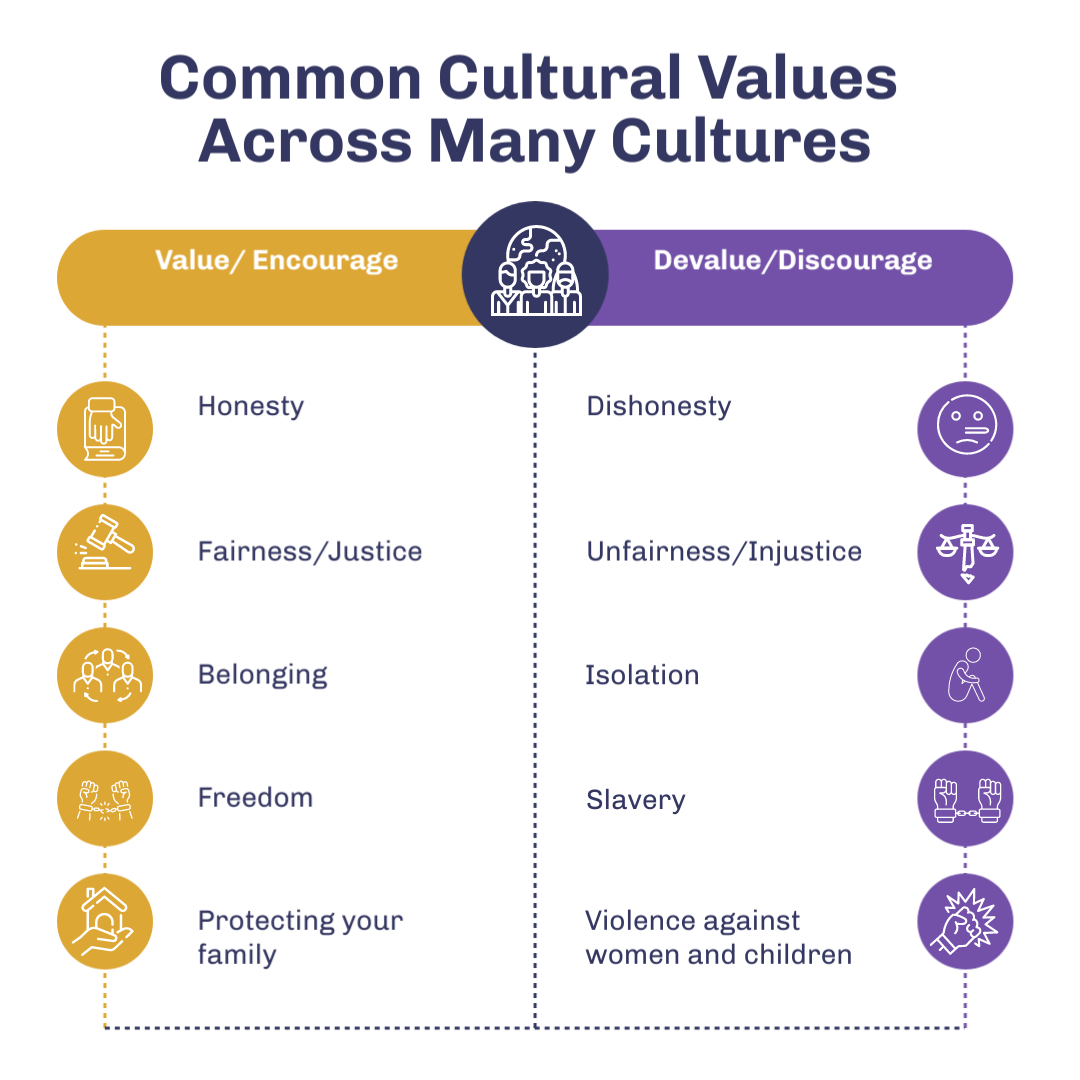
While from history we can see certain things about a culture and call them out as the evil that they are (such as cultural practices like female genital mutilation, or genocide of a certain people group, or slavery), many of the evils we see in the world aren’t a culture acting out, but certain people within a culture, or a specific part of a culture deciding do evil, and calling it a part of their culture (or it being associated with culture by others). Sometimes, like with the Civil War in America, wars are fought over what gets to be a part of HOW we do life.
It is easy to forget that when you compare cultures, you are doing so from within your own culture. The more unaware you are of how your own culture affects you, the less likely you will be able to accurately judge another culture: you can’t see how your glasses (culture) has tinted how you see everything else, effectively making your “vision” different from reality. While it is impossible to completely remove your glasses (culture), you can learn how they are tinted, and help you course correct—or at least—have humility and grace when you look at other cultures, realizing you don’t understand it all. A great way to start? Use the terms “Healthy and Unhealthy” for most cultural issues, rather than “Good or Bad.”