

Culture Study part 5 of 5: Is Being Anti-Multicultural Racist?
You can download the whole study HERE
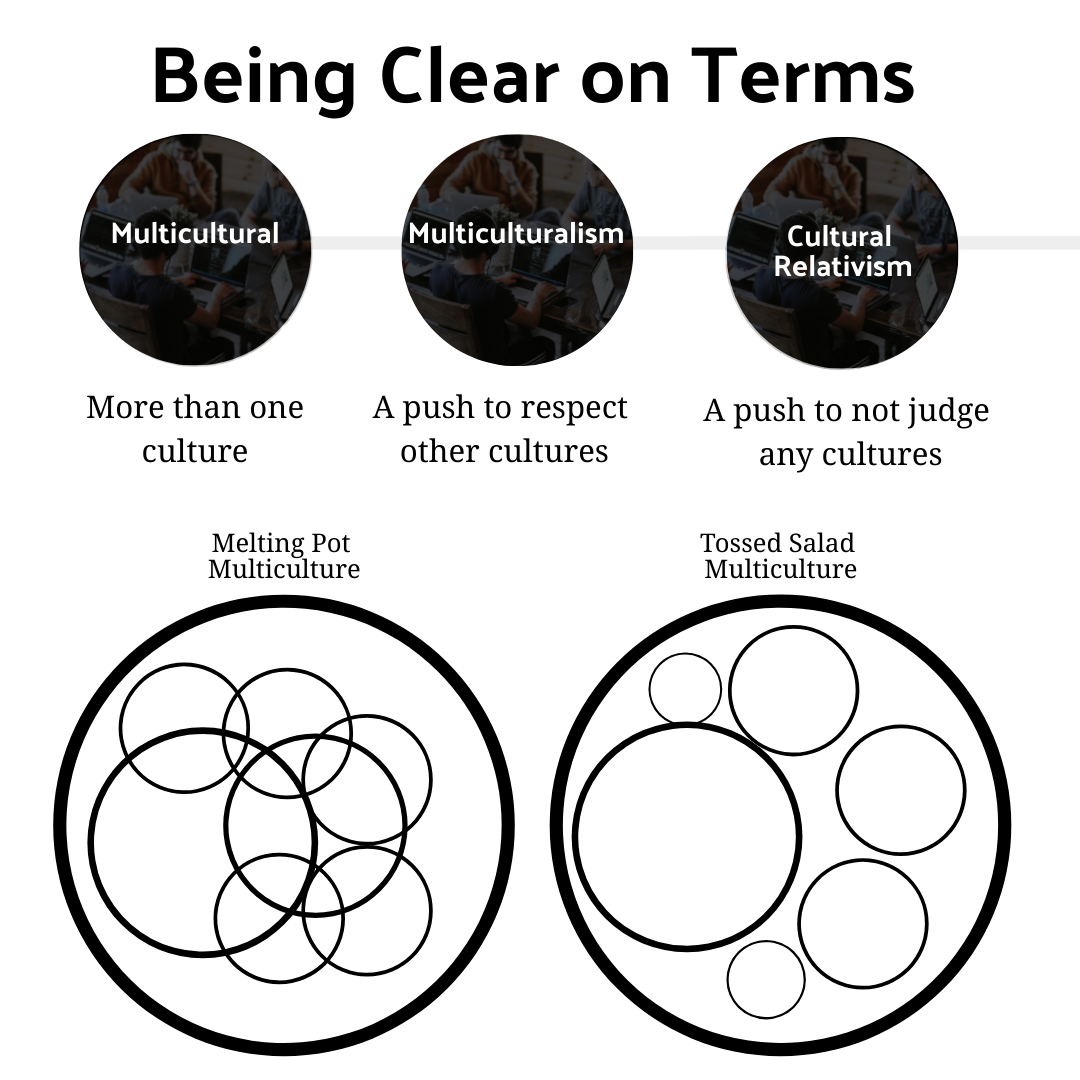
It is important to identify that there is a big difference between Multiculture and Multiculturalism and Cultural Relativism. being anti-multicultural is misunderstanding what culture is. Multiculture simply means more than one culture. Cultures of all kinds come together in all kinds of ways all the time in everyone's life. Saying your culture is better than someone else's is being blind to how God works through all cultures to draw people to Himself. Ethnicity is a part of culture, so if you say someone's culture is bad/wrong, it sounds like you are saying their ethnicity is bad/wrong: which is racist. If you do not want to be seen as racist, it is very important to understand your terms. If you feel the need to call out something wrong with someone else’s culture, please make sure it is clear that you are not talking about their ethnicity: you are talking about a particular part of their culture connected to personal choice, and that you also understand your own cultures’ failings.
How we live out multiculture can very greatly: are we many people coming together for the good of all, are we working together, or are we many people keeping our own separateness for the good of ourselves? In American history, we’ve seen white culture keep to their own separateness for their own power and control, so it makes sense that many people from that culture would assume that is what multicultures do. We can look and see examples of multicultures that are “melting pots” and others that are “tossed salads.” Multiculturalism is encouraging working together and integrating, without forcing assimilation to one culture, but inviting everyone to bring their best into what makes America great.
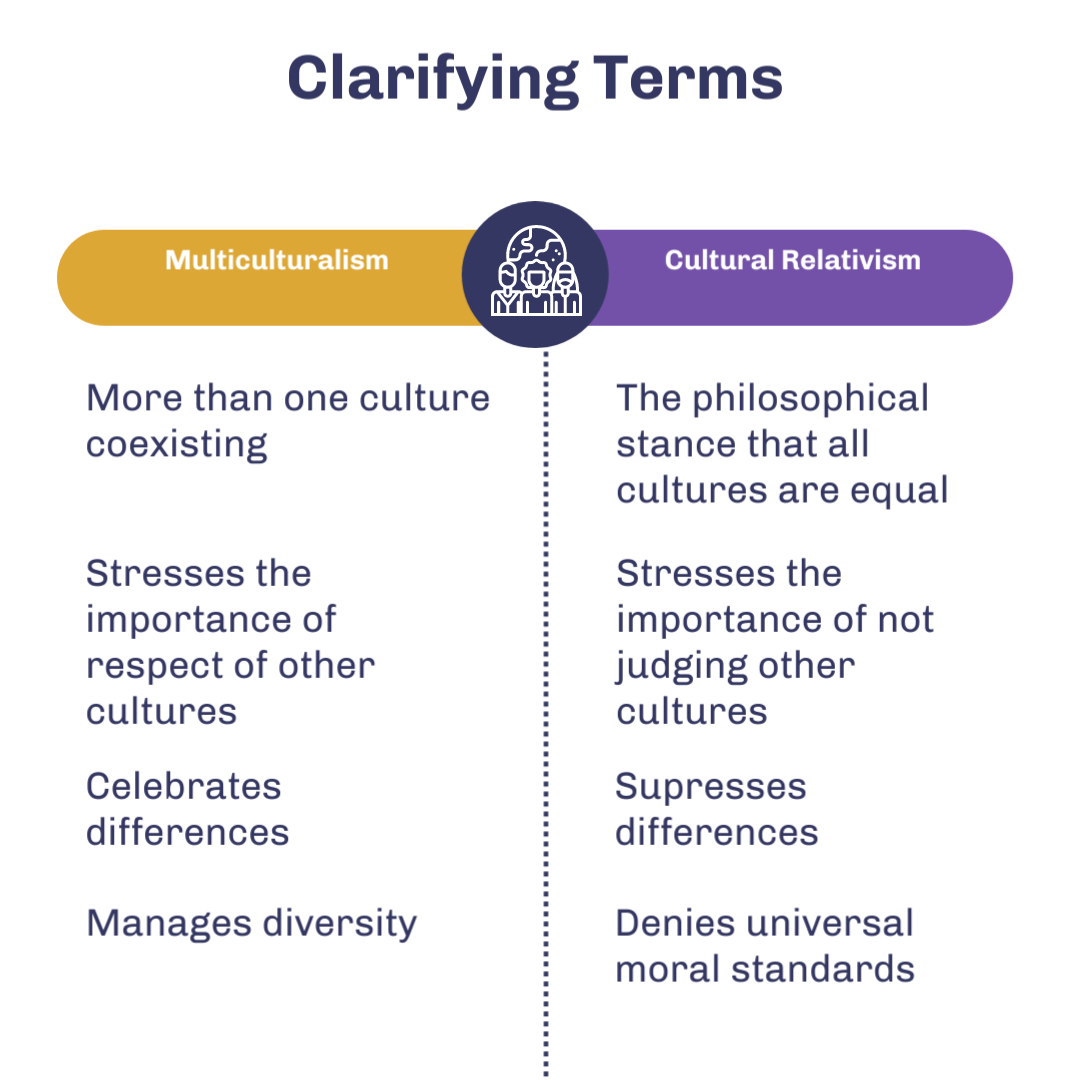
Multiculturalism and cultural relativism are reactions to anti-multiculture-ness. Is it important to respect much (if not most) of other people’s culture (especially their ethnicity)? Absolutely! Is it important to not judge a person’s ethnicity (which is part of their culture) as better or worse than another? Absolutely! We are all created equal. But cultural relativism also involves aspects that I completely disagree with. In a way, suppressing differences in cultural relativism is no different from suppressing differences in being anti-multicultural: the two extremes almost connect, which is true of many extreme and unbalanced beliefs.
Think about what makes a marriage great: two cultures coming together as one. It is not one person forgetting who they are, or becoming just like the other—but both bringing their best and working through how to integrate into one family, while respecting each other, and learning to understand the layers of culture and stories and history and reasons why they keep doing that thing that bothers you so badly. Sure: there are times that we need to call out our spouse on something that needs to change. But may we find the grace and humility to do it the way we want them to do it to us. And when there is a history of inequality and trauma involved? That’s another layer to consider, understand, and have grace for.